How AI Hearing Aids Help You Hear Speech in Loud Chicago Restaurants

Modern AI-driven hearing aids treat speech and noise as two separate audio streams.
The chip inside a flagship device samples the sound around you thousands of times per second. It identifies which frequencies carry the voice in front of you. Then it either dampens everything else or actively rebuilds the speech signal so consonants stay crisp.
That is the difference between a restaurant feeling exhausting and a restaurant feeling navigable. The science is not new. The chips have only become powerful enough to do it well at conversational scale in the last two product cycles.
Audiologic Services Chicago, which provides hearing aids in Chicago, in Streeterville, a few blocks from Navy Pier, offers Oticon, Widex, Phonak, Signia, Starkey, and ReSound. All six brands have shipped AI noise-processing in their flagship lines, and the underlying approaches differ in interesting ways. Understanding which one suits your listening life matters more than chasing the highest-tier model on the shelf.
The restaurant problem, in technical terms
Restaurants are acoustically punishing. Plates clatter. Tables chatter. HVAC rumbles. Hardwood floors reflect sound rather than absorb it. Your own dinner companion is competing with all of it at once.
Your brain normally does the separation work on its own. With even moderate high-frequency hearing loss, the consonant sounds that make speech intelligible (the t, s, sh, f, and th frequencies between roughly 2000 and 6000 Hz) get cut out of the mix before your brain ever gets a chance to sort them.
What "loud" actually measures
A quiet restaurant runs around 50 to 60 decibels. A bustling one runs 75 to 85. Many Chicago dining rooms with high ceilings and exposed brick land closer to 90 decibels during peak hours.
The number that actually determines whether you can follow a conversation is the signal-to-noise ratio. That is the gap between speech volume and background volume. In a quiet office, you might enjoy a 20 decibel speech advantage. In a packed dining room, that advantage often shrinks to zero or goes negative.
Why older hearing aids made things worse
Hearing aids from a decade ago amplified everything.
If your companion's voice came through at 65 decibels, the device boosted it. If the surrounding noise was 80 decibels, it boosted that too. The amplification preserved the bad ratio instead of fixing it.
The newer generation does the opposite. It identifies the speech signal, lifts it, and either compresses or suppresses the rest.
How modern AI actually separates speech from noise
The chip inside a flagship hearing aid is closer in capability to a smartphone processor than to a previous-generation hearing aid from a decade ago. It runs trained models that have heard millions of real-world sound environments. Those models have learned what speech looks like at the spectral level versus what restaurant clatter looks like.
The models are tiny by computer-science standards. They run on the device itself, with no cloud round trip and no perceptible latency.
Oticon's approach
Oticon's BrainHearing platform leans into the idea that the brain, not just the ear, is doing the listening.
Their flagship Intent model adds a 4D Sensor that reads your head and body movement to infer what you are actually trying to listen to. Lean forward toward someone across the table, and the device interprets that as intent to hear them. It adjusts noise suppression accordingly.
The company describes Intent as "the world's first hearing aid capable of understanding your listening intentions." That is marketing language, but the underlying sensor fusion (microphones plus motion data) is real and measurable.
Intent also handles phone calls hands-free through a double-tap gesture. The Oticon Companion app gives you per-environment fine tuning from your phone without a return visit to the clinic.
Widex's approach
Widex frames the problem differently.
Their ZeroDelay processing aims to get sound through the device in under ten milliseconds. That is below the threshold where you would notice a delay between speech and lip movement.
The Moment Sheer adds AI personalization on top of that, learning your preferred settings across different sound scenes and applying them automatically. Speech Enhancer Pro is the feature in their lineup built around the restaurant problem, softening background chatter while pushing the speech signal forward.
Widex SmartRIC runs the same processing in an L-shaped device with up to 37 hours of battery life. The Allure model adds a dynamic feedback controller that handles the whistle problem that used to plague RIC devices in loud rooms.
Directional microphones and beamforming
Every major brand layers a hardware technique called beamforming on top of the AI.
Two or more microphones on the device measure the slight time difference between when a sound hits each one. The chip uses that timing data to build a virtual cone of focus in front of you.
The cone picks up sound coming from your dinner companion. It rejects sound coming from the table behind you. Wider cone, more spatial awareness. Narrower cone, more aggressive noise rejection. Most devices switch between settings automatically based on the listening scene.
Where the AI still struggles
The honest version of this story is that AI noise processing has gotten very good, not perfect. There are still listening environments that defeat current devices in predictable ways.
Reverberation
Hard-surface rooms with tall ceilings (think of a hotel atrium or a converted warehouse restaurant on West Loop) bounce sound multiple times before it reaches your ears. The same word arrives two or three times in quick succession, blurring the consonants.
AI processing reduces the effect. It cannot eliminate it.
The trick in these rooms is usually positioning. Sit with your back to a soft surface and your companion in front of a hard one, so the speech reaches you directly and the bounces hit your back instead.
Multiple competing voices
If three people at your table all talk at once, even the best directional microphone struggles to pick which one to follow.
Newer Oticon devices try to preserve all the voices at lower volume rather than cutting them out, on the theory that your brain prefers to do the final selection. Other manufacturers prioritize the loudest or most central voice.
Neither approach is wrong. The experience is different. Sample both during a trial period.
Very soft speech in noise
When the speech signal itself is quieter than the background, the device has less material to work with.
Some flagship models add a separate microphone accessory that the speaker wears on their lapel and that streams directly to your hearing aids over Bluetooth. The Roger system from Phonak is the most established example. It moves the input microphone from your ear to the talker's mouth and bypasses the room acoustics entirely.
Background music with vocals
Live music venues and restaurants that play music with sung vocals are a particular challenge. The music itself contains speech-frequency content.
The device cannot easily tell the difference between your dinner companion's voice and the singer's. Trying to suppress one tends to suppress the other.
The fallback in those rooms is usually a music or speech-in-music program in the device that takes a lighter touch on noise reduction. Most flagship devices let you toggle to that program from the companion app on your phone in a few seconds.
What this actually means for your night out
If you live a life with regular dinners out, weddings, group celebrations, work events, or any environment where the room is loud and the conversation matters, the AI noise-processing tier is the feature that moves the needle. Almost everything else on the spec sheet is a nice extra.
When you sit down for a hearing aid trial, ask for a noise simulation as part of the demo.
Most reputable audiology practices have a sound system in the fitting room that can reproduce a calibrated restaurant scene. Try the device in that scene with the AI noise features on, then off. The difference is dramatic on a properly programmed flagship and modest on an entry-tier device. That contrast is what you are actually paying for when you move up a tier.
Also ask about real-ear measurement during the fitting. The technology only delivers on its promise when the device is calibrated to the unique acoustics of your ear canal. Without that calibration step, the same flagship device performs closer to a mid-tier model because the noise-suppression curves are set for a generic ear instead of yours.
Real-ear measurement takes another fifteen minutes during fitting and changes the result significantly. It is standard at most established Chicago audiology practices but not at every retailer in the metro.
Finally, give the device time.
The brain adapts to the new sound profile across roughly two to four weeks of consistent wear. The first week in a loud restaurant will feel imperfect even with a flagship device. The fourth week will feel like a different night out.
Quick checklist for the trial fitting
Bring a phone with the device's companion app installed so you can test app-based fine tuning in the chair.
Ask the audiologist to demo the device with directional microphones in fixed front-focus mode and again in automatic mode. Compare the two in a simulated noisy scene. Have them show you the music or speech-in-music program if you spend time in venues with live performance.
Confirm that real-ear measurement is part of the fitting and not an upcharge. Confirm the return-window length and what portion of the fitting fee, if any, stays with the clinic if you decide to return the device.
None of those questions are confrontational. Reputable practices welcome them because they signal a buyer who actually plans to wear the devices. That is the buyer who ends up satisfied at the end of the trial period.
The audiologist's job is easier when the patient has clear expectations of what the technology can and cannot do. The restaurant scenario is the single best test of where current AI noise processing has actually landed.
RELATED ARTICLES
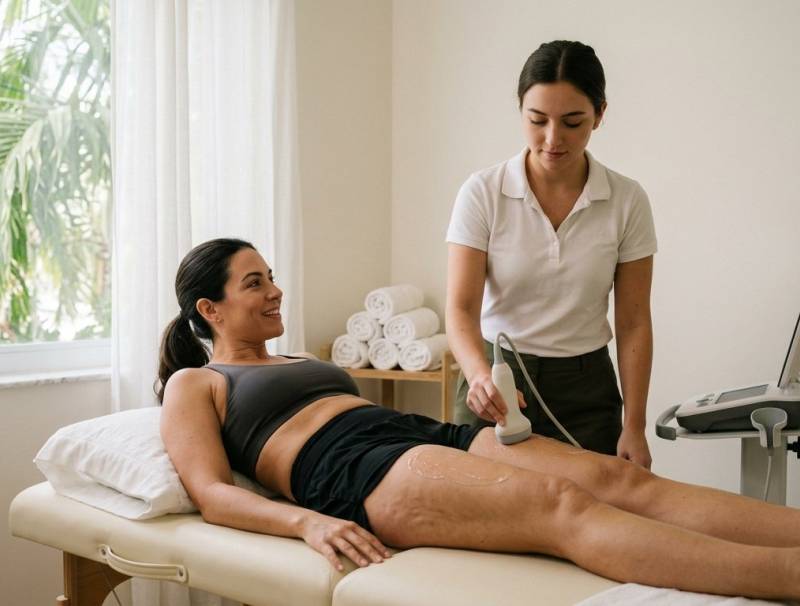
Stubborn fat ignores the gym, and that is the whole pitch behind ultrasonic cavitation.

The phrase that ruins this for everybody is "put under." People use it casually, the way you would talk about getting your oil changed, and it plants a picture that has very little to do with what

Most Knoxville homeowners shopping for a tankless water heater pick the wrong size.

A 2023 study by the National Association of Realtors found 30% of homebuyers would not buy a house with old plumbing. Yet, only 12% of sellers focus on plumbing upgrades.

According to The Water Heater Warehouse (a special

As a homeowner, you know how important a reliable water heater is. Water heating takes up about 18% of your monthly bills.